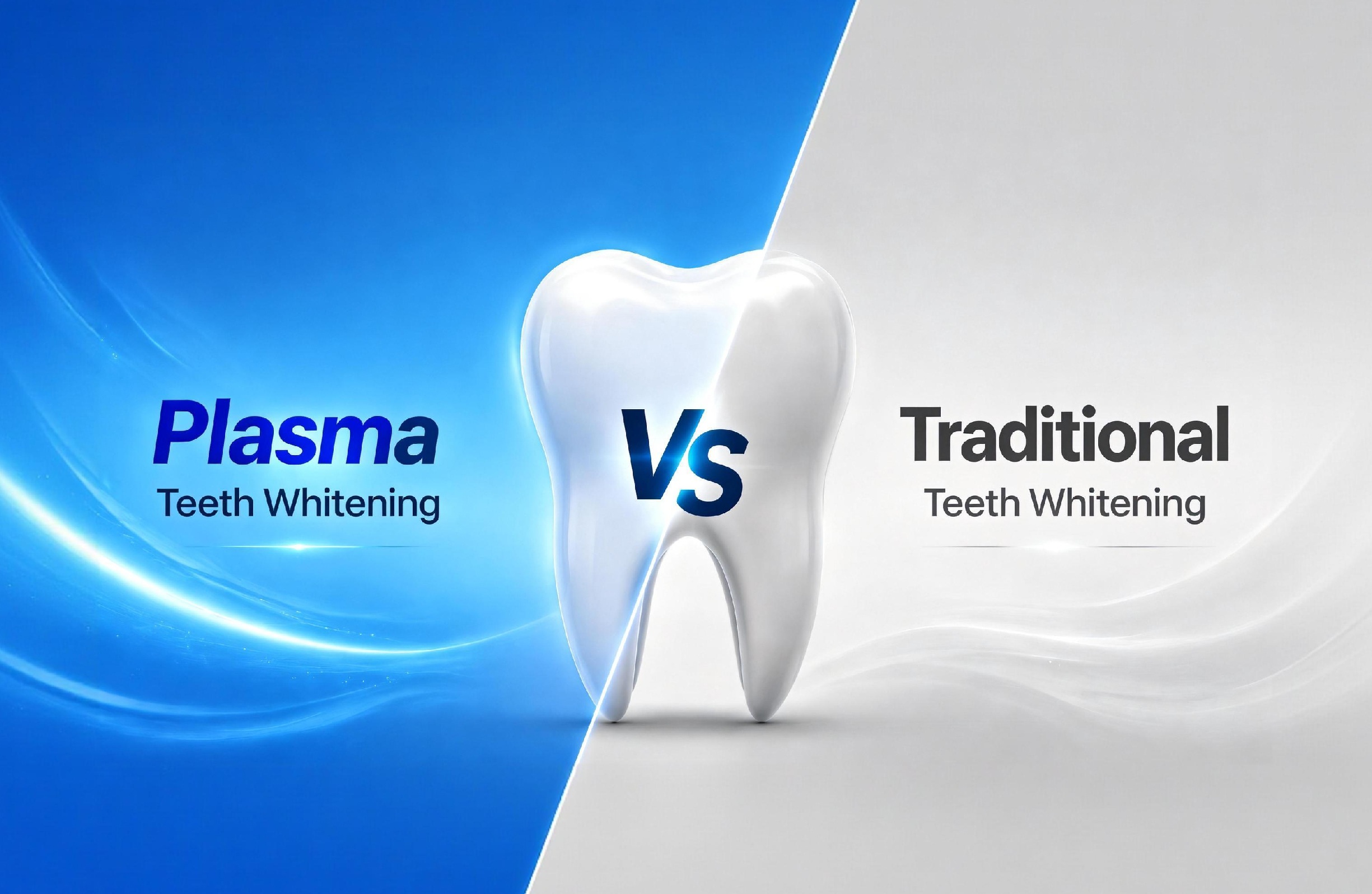
As teeth whitening technology continues to evolve, Plasma Teeth Whitening has emerged as a new generation of professional whitening technology. Its unique low-concentration, high-activity approach has attracted growing attention from both dental professionals and consumers.
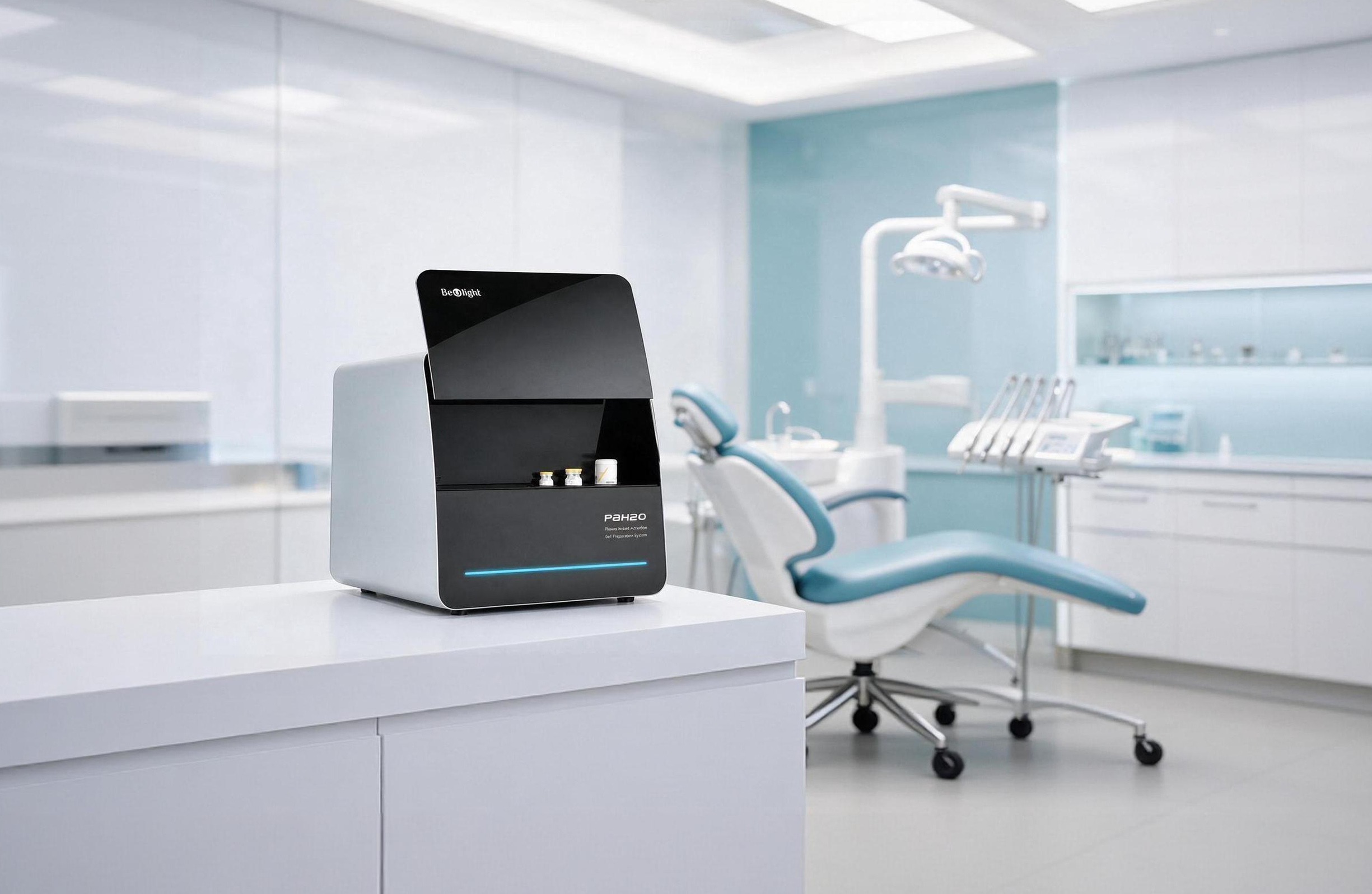
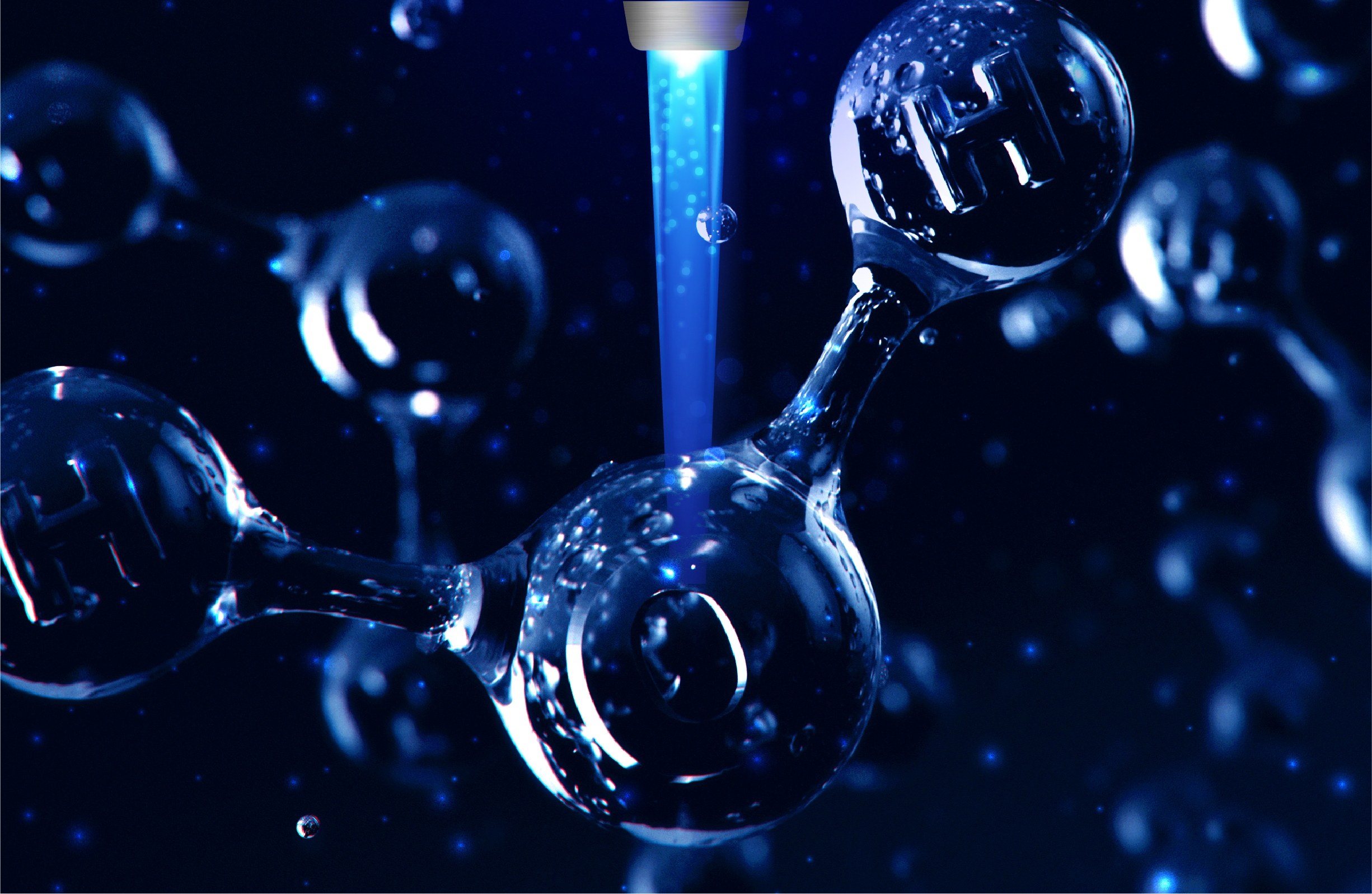
Plasma Teeth Whitening is a professional teeth whitening solution based on Plasma Activation Technology.It works by using a low-temperature plasma jet to activate water and low-concentration hydrogen peroxide (≤3% HP), generating hydroxyl radicals (•OH) and Reactive Oxygen Species (ROS) that efficiently break down tooth stains while maintaining a lower peroxide concentration.
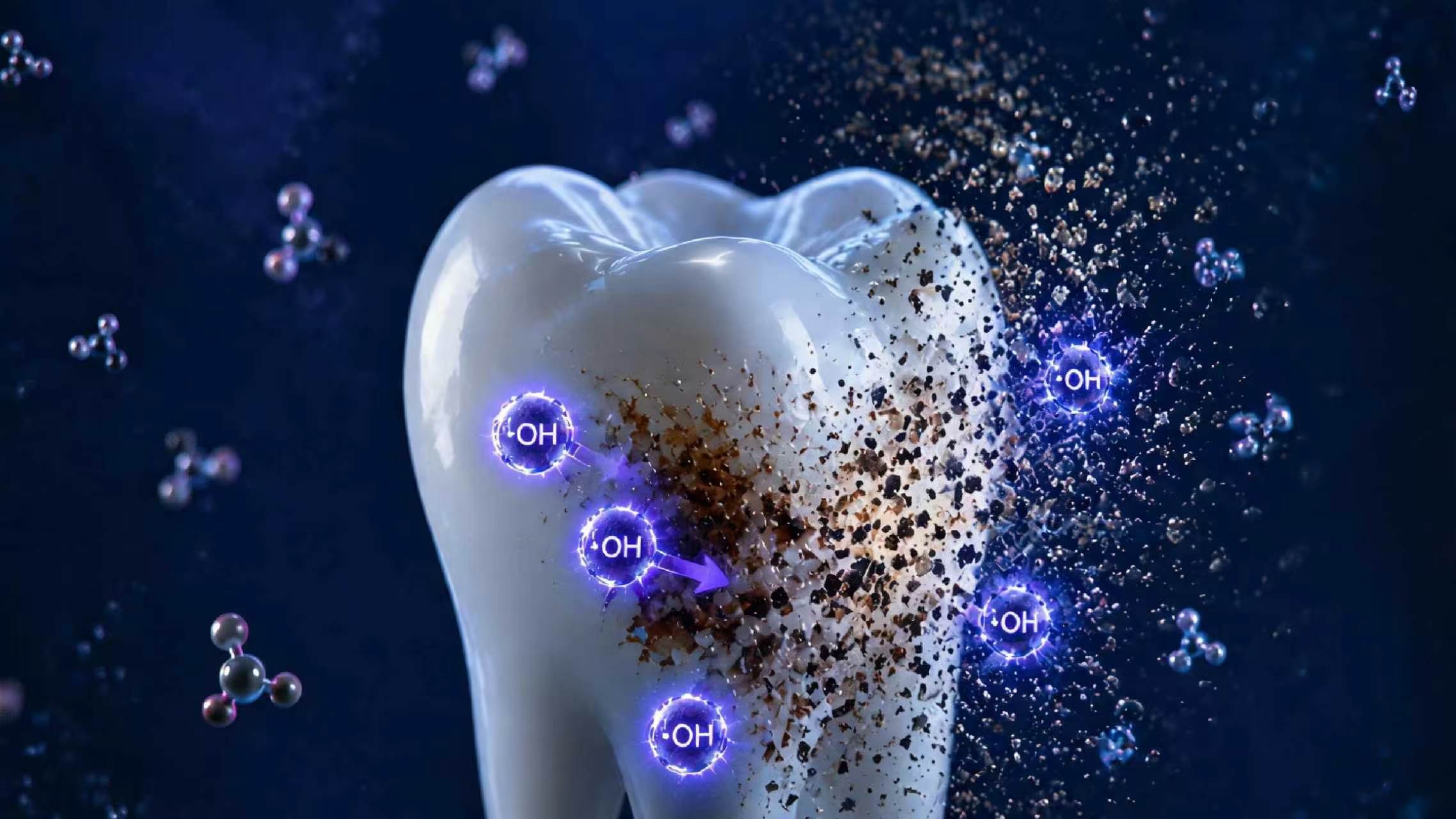
The key to Plasma Teeth Whitening is not increasing hydrogen peroxide concentration. Instead, it uses Plasma Activation Technology to create a highly active oxidation system.This process rapidly generates hydroxyl radicals (•OH) and various Reactive Oxygen Species (ROS), significantly improving stain removal efficiency even with low-concentration hydrogen peroxide.
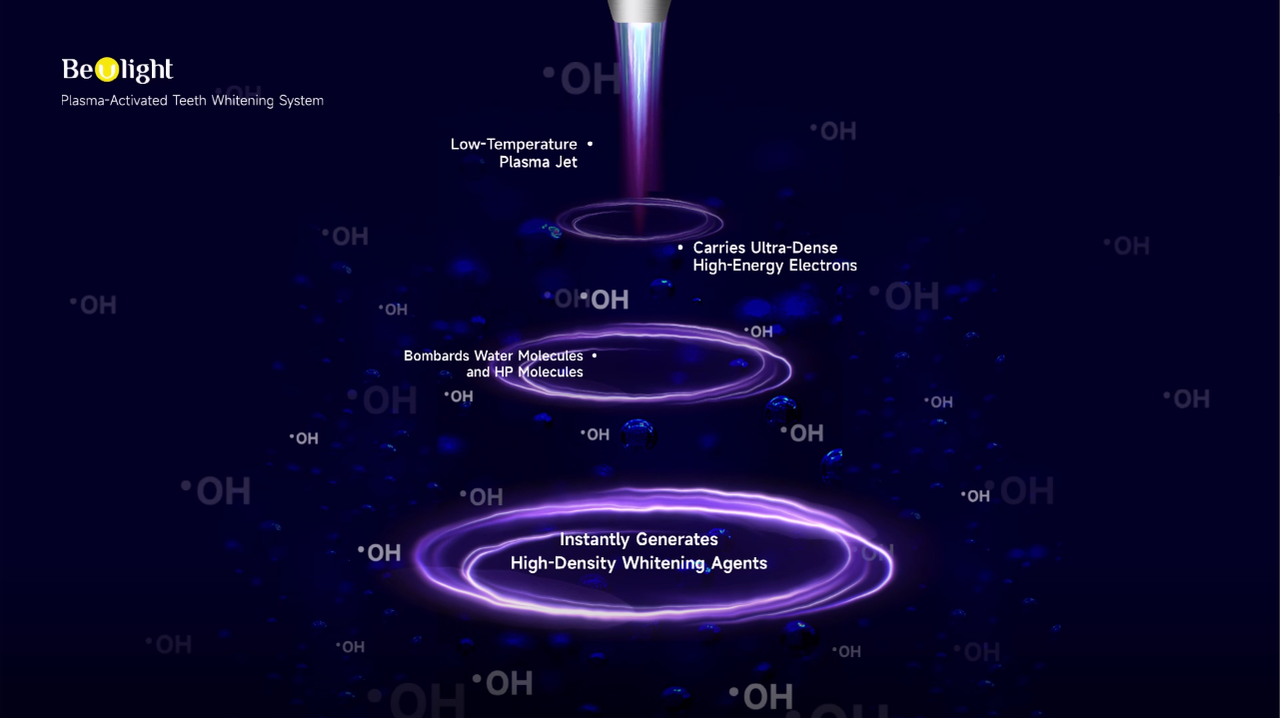
1.Low-Temperature Plasma Activation
The whitening system consists of three essential components:
·Low-temperature plasma jet
·Water (H₂O)
·≤3% hydrogen peroxide
The low-temperature plasma jet acts as a source of high-energy electrons.
When energy from the plasma jet is introduced, the chemical bonds in water molecules and hydrogen peroxide molecules are activated, broken, and reformed. This plasma activation process transforms a low-reactivity chemical system into a highly reactive oxidation system, creating the ideal conditions for efficient stain degradation.
2.Rapid Generation of Highly Reactive Oxidizing Species
Following plasma activation, the system rapidly generates a large number of highly reactive oxidizing species, including:
<1>Hydroxyl Radicals (•OH): Hydroxyl radicals are among the most powerful oxidizing species known. Their oxidation potential is significantly higher than that of hydrogen peroxide itself. As a result, plasma activation enables even a low-concentration hydrogen peroxide system to generate highly reactive hydroxyl radicals with exceptional oxidation capability.
<2>Reactive Oxygen Species (ROS): In addition to hydroxyl radicals, plasma activation also produces a variety of Reactive Oxygen Species (ROS). These highly reactive species are subsequently stabilized within the activated whitening gel, creating an active oxidation system that effectively targets tooth stains.
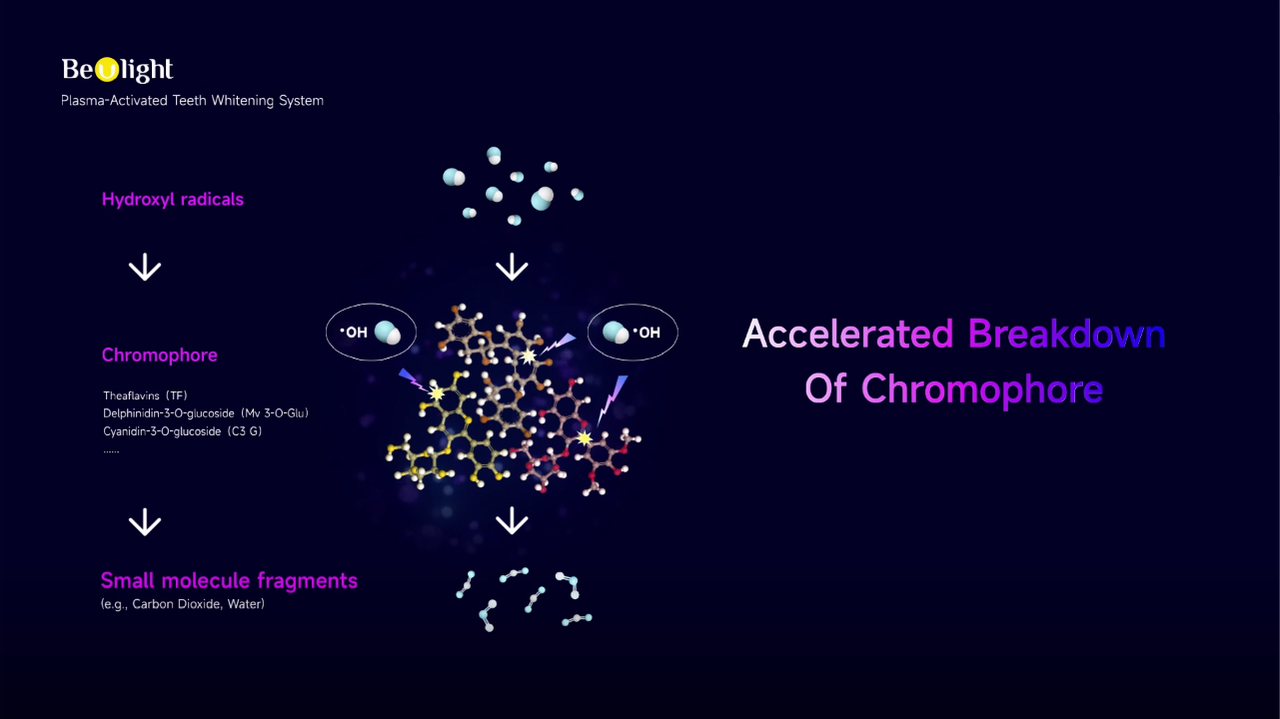
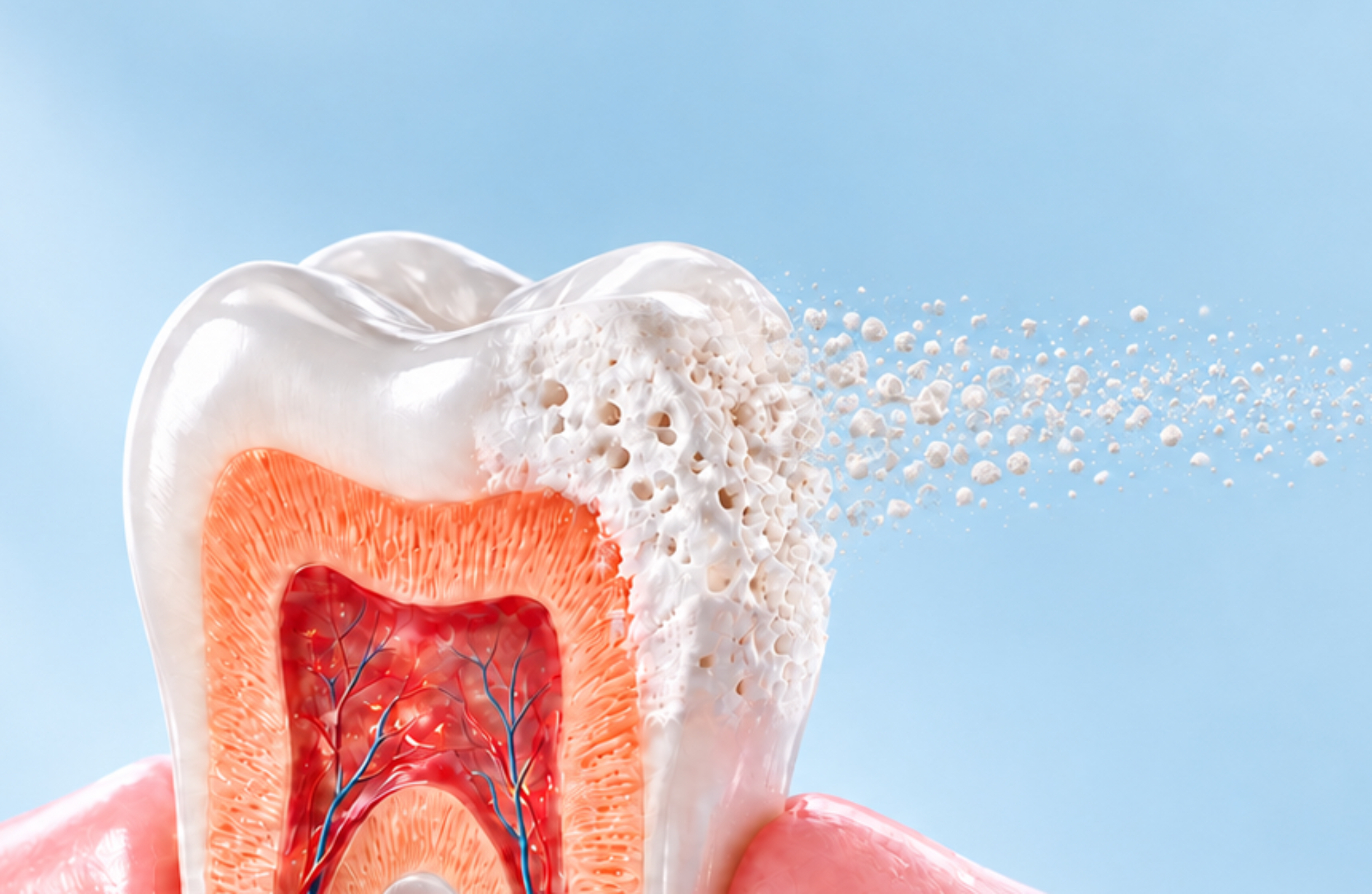
Tooth discoloration is primarily caused by pigment molecules that contain chromophores and conjugated molecular structures, which absorb visible light and give teeth a darker appearance. These pigments commonly originate from coffee, tea, tobacco, and other external staining sources, as well as certain mild to moderate intrinsic discoloration.
When the activated whitening gel, rich in highly reactive oxidizing species, comes into contact with these pigment molecules, it breaks them down through several molecular processes:
1.Breaking Down Chromophores:Highly reactive oxidizing species attack the chromophores responsible for color, reducing their ability to absorb visible light. As these color-producing structures are disrupted, the appearance of stains gradually fades, revealing a brighter tooth shade.
2.Disrupting Conjugated Molecular Structures:Many stain molecules derive their color from conjugated double-bond structures. Oxidation disrupts these molecular networks, causing the pigments to progressively lose their color.
3.Breaking Large Pigment Molecules into Smaller Compounds:The remaining large pigment molecules are further oxidized and broken down into smaller, colorless or lighter-colored compounds that are easier to eliminate.
As stain molecules continue to break down, teeth gradually regain a cleaner, brighter, and more natural appearance.
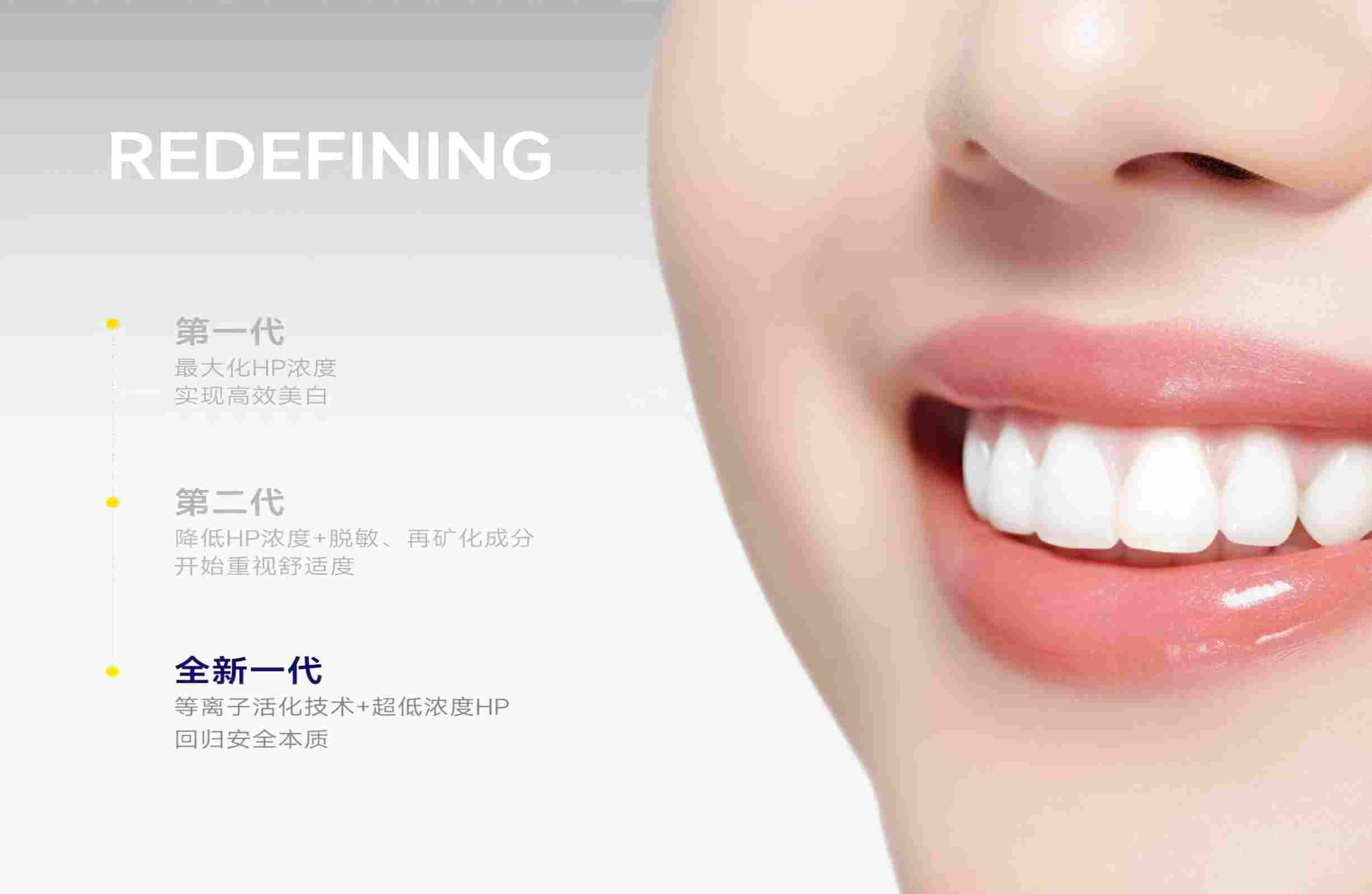
Traditional teeth whitening systems typically rely on increasing hydrogen peroxide concentration to enhance oxidation. As a result, a common assumption has emerged within the industry: the higher the peroxide concentration, the stronger the whitening effect. However, whitening performance depends not only on peroxide concentration, but also on how efficiently reactive oxidizing species are generated within the system.
Plasma Activation Technology uses a low-temperature plasma jet to activate water and low-concentration hydrogen peroxide, rapidly generating hydroxyl radicals (•OH) and other Reactive Oxygen Species (ROS). This process creates a highly active oxidation environment in a short period of time.As a result, the system can effectively break down stain molecules and deliver efficient whitening performance, even when using hydrogen peroxide concentrations of ≤3% HP.
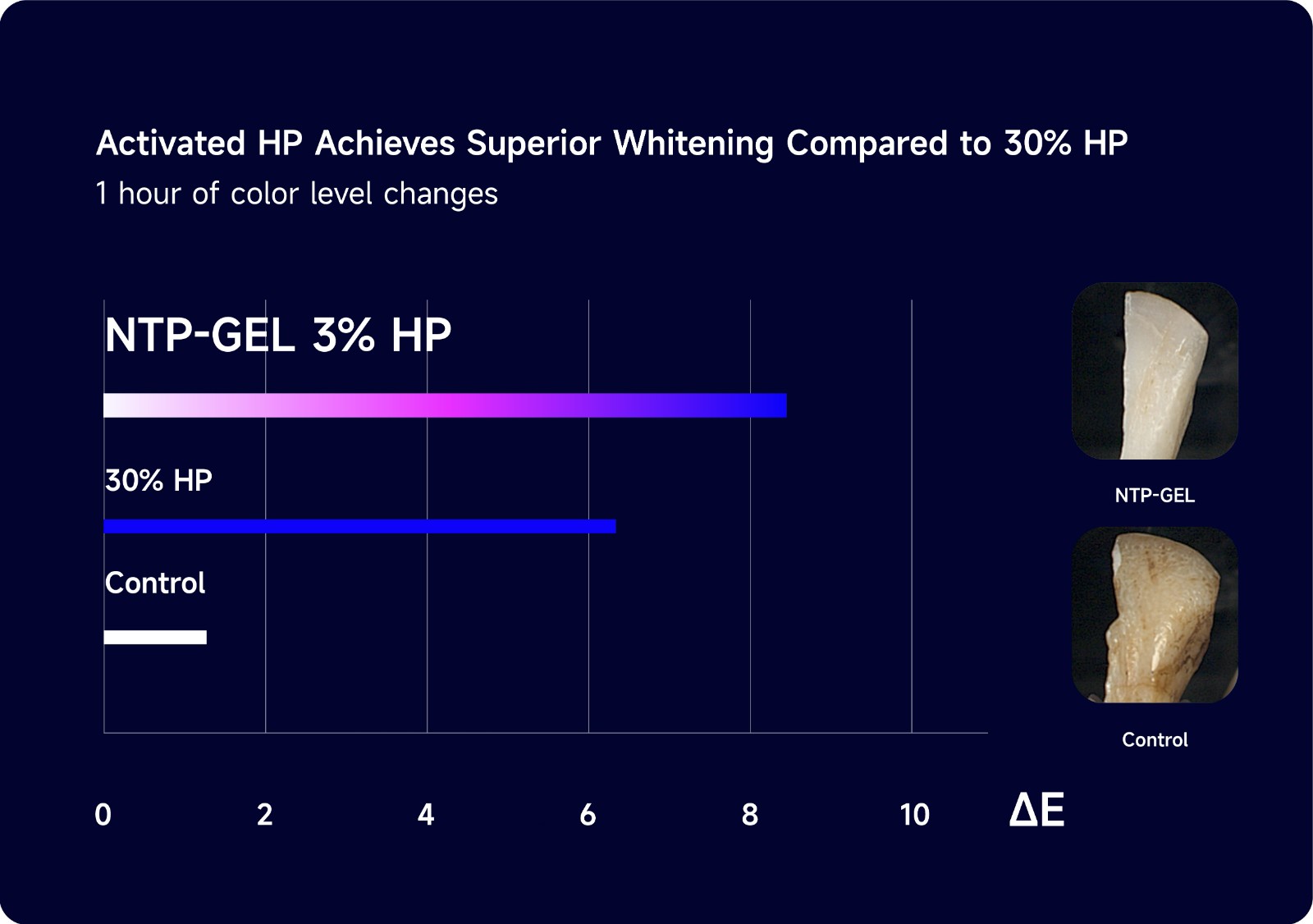
Studies have shown that a plasma-activated 3% hydrogen peroxide system can achieve greater color improvement per unit of treatment time than conventional whitening systems based on 30% hydrogen peroxide.
From a technological perspective, Plasma Teeth Whitening does not rely solely on increasing chemical concentration. Instead, it improves whitening efficiency by enhancing the reactivity of the whitening system itself.
This transition from a concentration-driven approach to an activity-driven approach represents an important advancement in modern teeth whitening technology and reflects the future direction of professional whitening innovation.