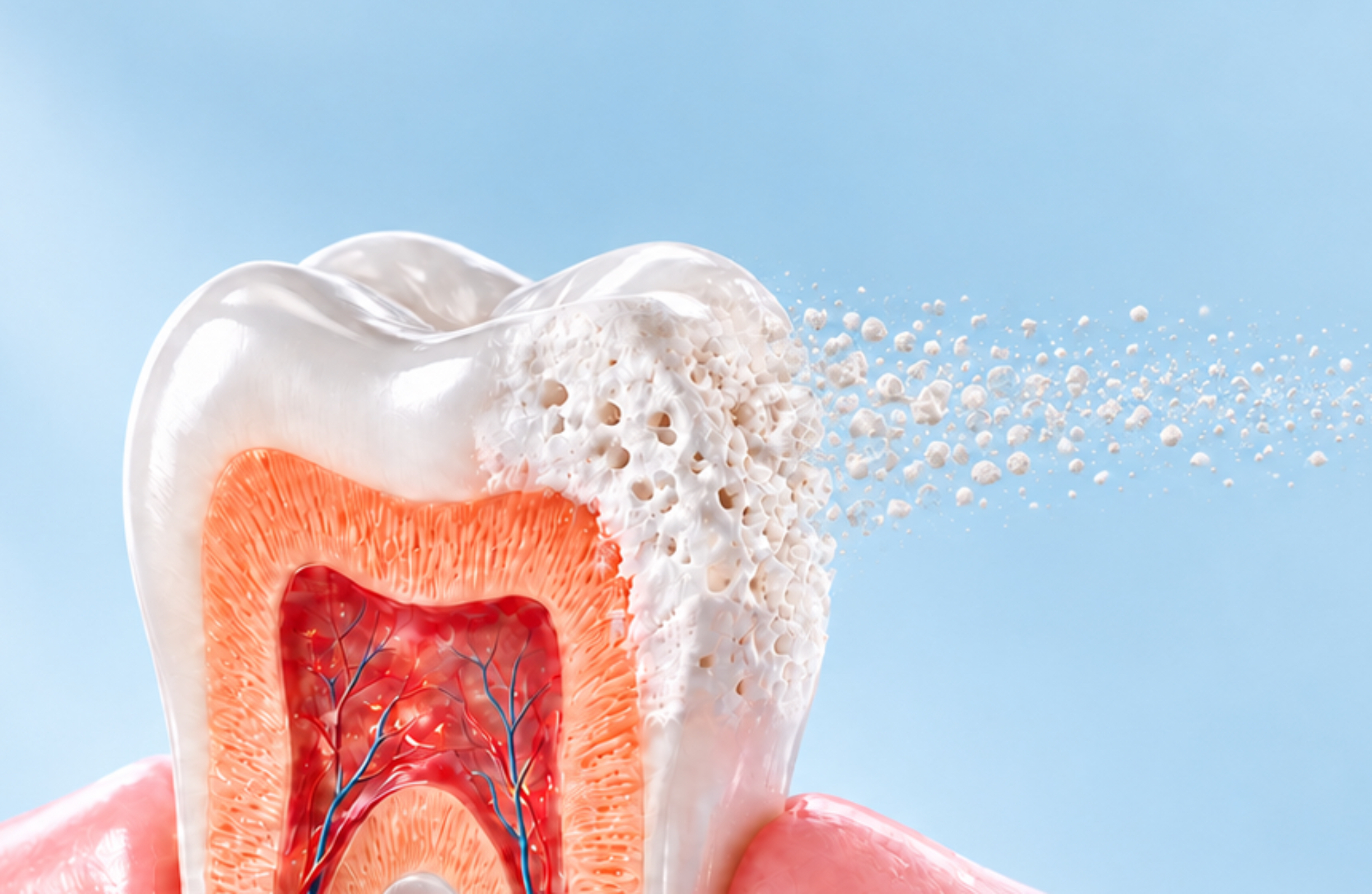
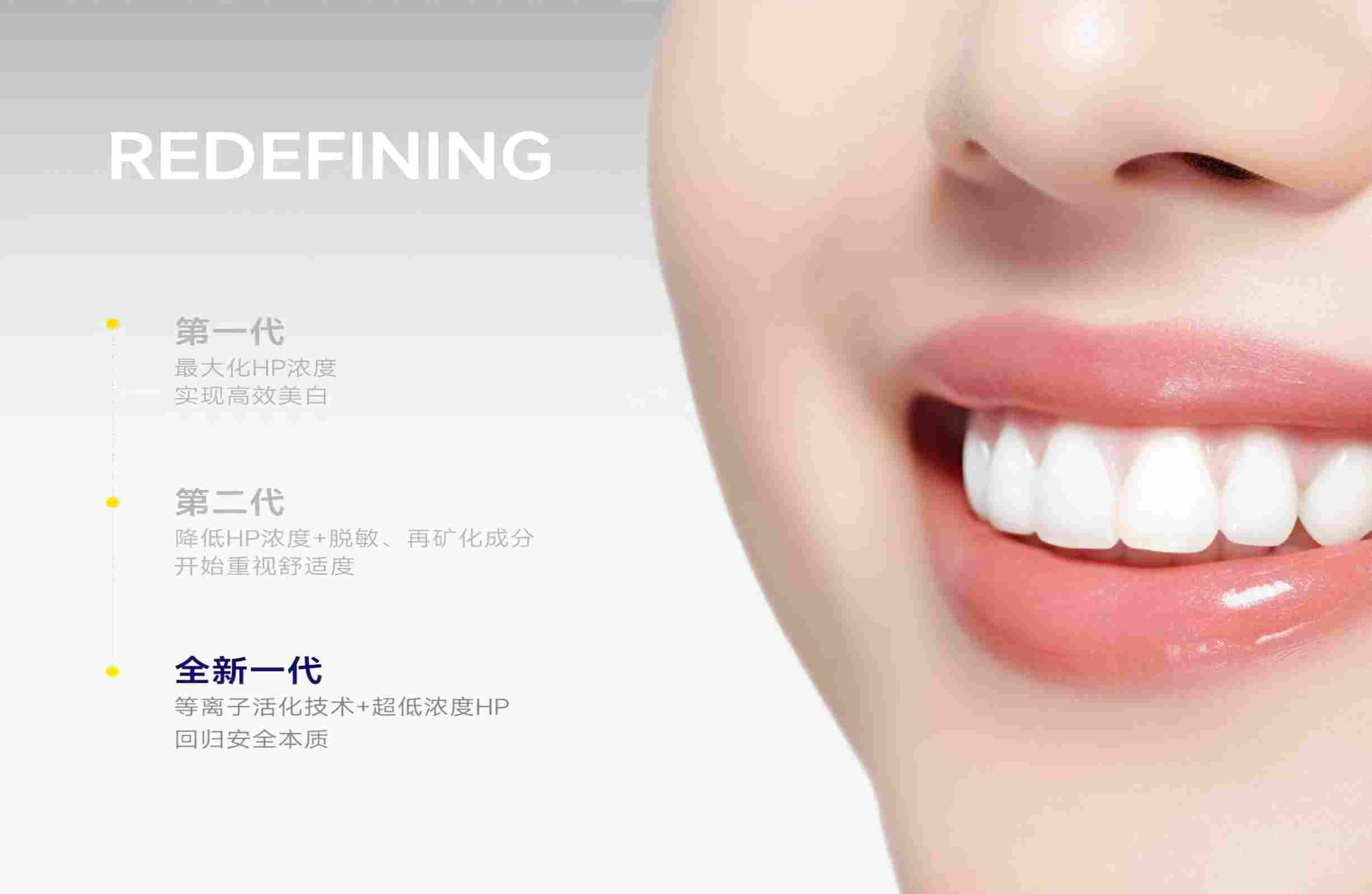
In professional teeth whitening, hydrogen peroxide (HP) has long been regarded as the core active ingredient. For many years, the industry has widely believed that whitening effectiveness is closely correlated with hydrogen peroxide concentration, which is why high-concentration HP formulations have traditionally dominated the field.
However, with the continuous advancement of teeth whitening technologies, a new approach has been gaining increasing attention—low-temperature plasma activation technology.
So why can low-concentration hydrogen peroxide still achieve noticeable whitening results? The answer does not lie in hydrogen peroxide itself, but in the activation effect of low-temperature plasma jets.
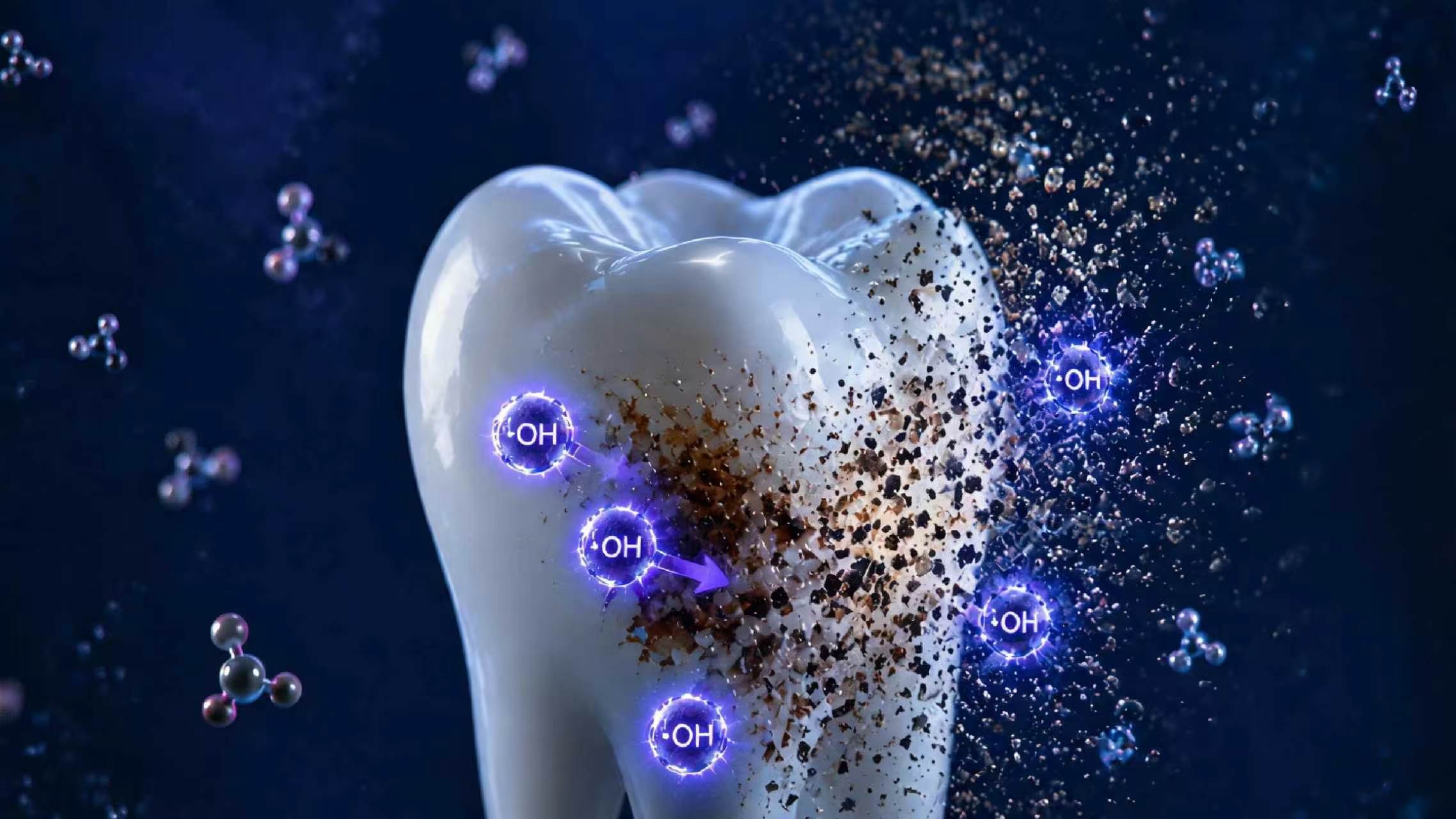
From a chemical mechanism perspective, hydrogen peroxide is not the direct agent responsible for tooth whitening. The actual species involved in pigment degradation are Reactive Oxygen Species (ROS) generated during hydrogen peroxide decomposition, including hydroxyl radicals (•OH), hydroperoxyl radicals (•OOH), and superoxide anions (O₂⁻).
These reactive species possess extremely strong oxidative capacity. They attack chromophores in surface and shallowly deposited dental stains, disrupting their conjugated structures and reducing their ability to absorb visible light, thereby gradually lightening tooth color.
Therefore, fundamentally, the key determinant of whitening efficiency is not merely hydrogen peroxide concentration, but rather the generation efficiency and utilization efficiency of reactive oxygen species (ROS).
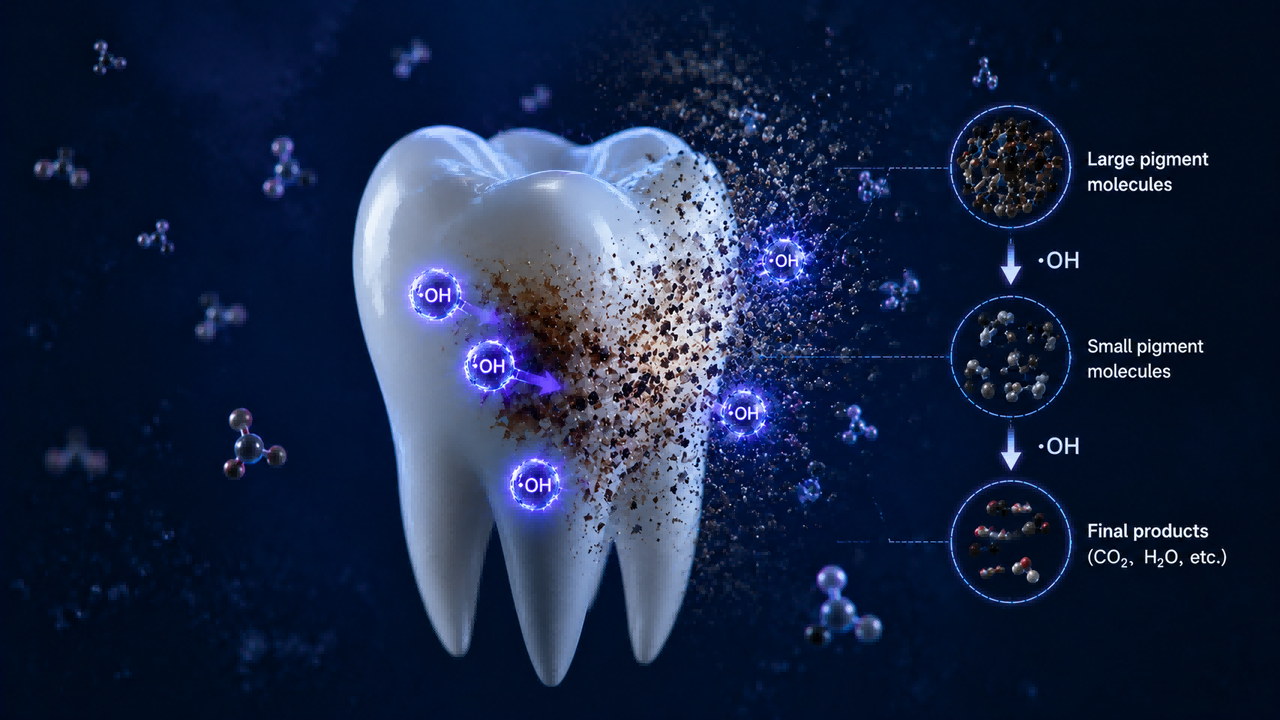
Low-temperature plasma is known as the “fourth state of matter,” composed of electrons, ions, free radicals, and excited-state species.Unlike thermal plasma, low-temperature plasma remains close to room temperature overall, while its internal electrons possess high kinetic energy.These high-energy electrons interact with hydrogen peroxide and water molecules, triggering a cascade of activation reactions.
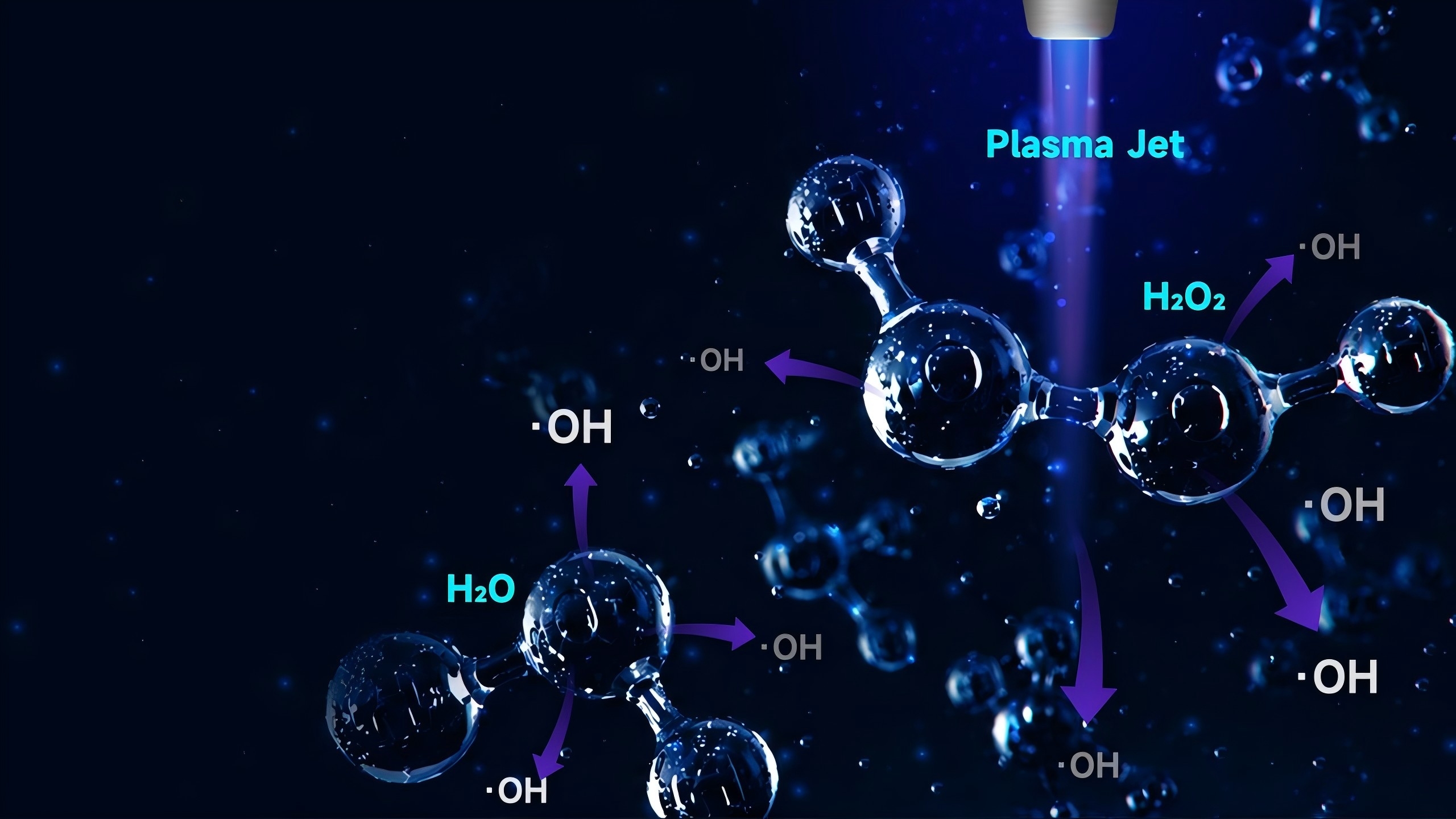
In the teeth whitening process, low-temperature plasma does not simply provide heat; instead, it continuously supplies energy to the reaction system through high-energy electrons.When these high-energy electrons interact with hydrogen peroxide (H₂O₂) and water (H₂O), they promote molecular dissociation and generate a greater number of highly reactive oxidative species, including key components such as hydroxyl radicals (•OH).This process rapidly activates an otherwise relatively stable hydrogen peroxide system, creating a highly reactive oxidative environment.
In conventional teeth whitening processes, hydrogen peroxide primarily generates reactive oxygen species through natural decomposition. However, this decomposition efficiency is influenced by factors such as concentration, temperature, and exposure time, which limits the number of reactive species that can effectively participate in the reaction.
The introduction of low-temperature plasma activation fundamentally changes this process. By continuously supplying high-energy electrons, low-temperature plasma promotes the conversion of hydrogen peroxide into reactive oxygen species, increasing their generation efficiency and enabling a greater proportion of hydrogen peroxide to participate in effective reactions.
Related studies indicate that the combined use of low-temperature plasma and low-concentration hydrogen peroxide can significantly increase hydroxyl radical production, thereby enhancing the efficiency of tooth decolorization reactions. [1] Reference: excerpt from the WeChat public account Baiyan Institute, “How Plasma Technology Enables Low-Concentration Hydrogen Peroxide…”
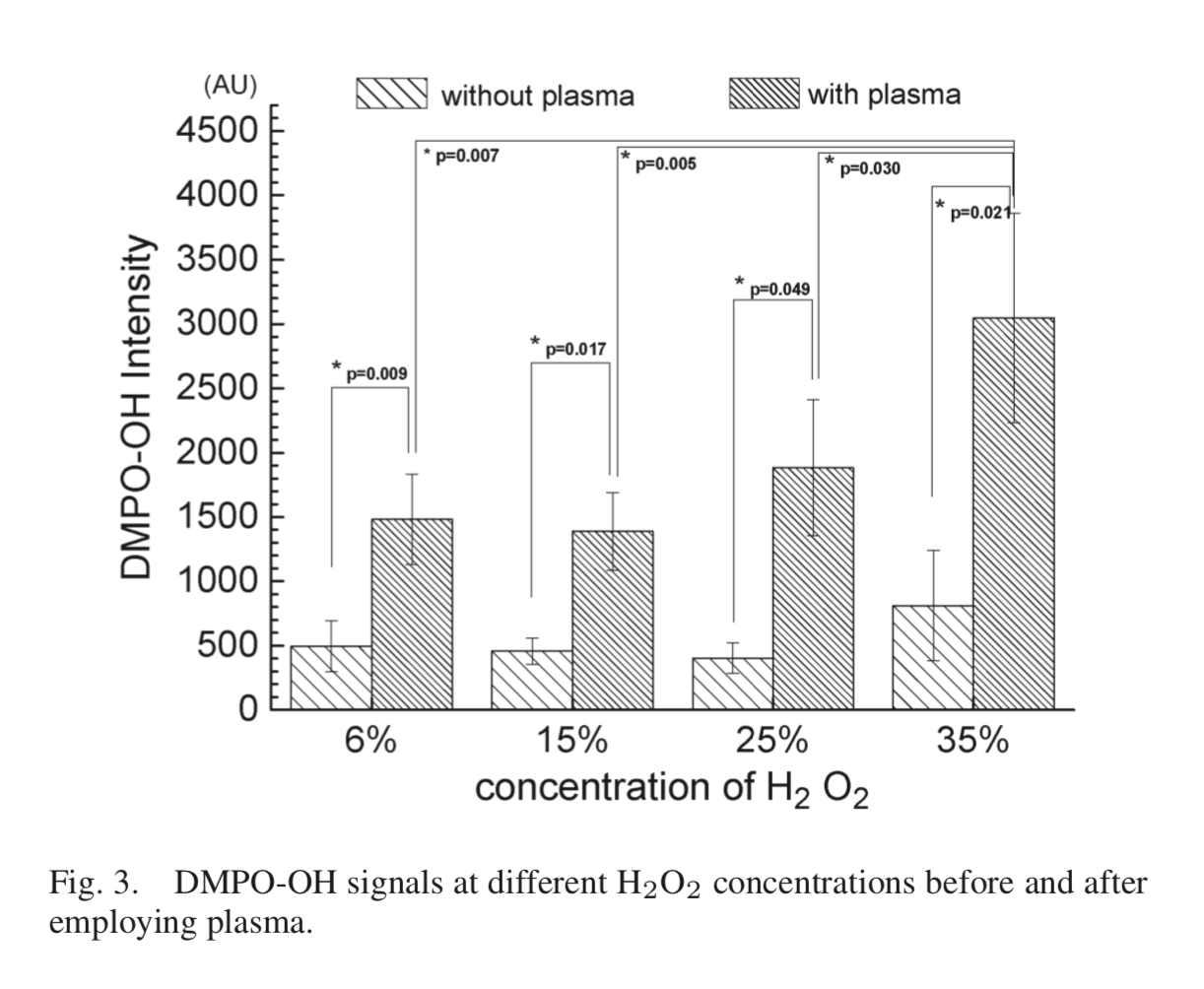
In other words, traditional approaches primarily rely on increasing hydrogen peroxide concentration to achieve whitening effects, whereas low-temperature plasma activation technology enhances results by improving the efficiency of reactive oxygen species (ROS) generation.
With the above mechanism understood, the answer becomes clear. Traditional whitening technologies mainly rely on increasing hydrogen peroxide concentration to raise the total amount of reactive oxygen species.In contrast, low-temperature plasma activation technology improves the activation efficiency of hydrogen peroxide, enabling more H₂O₂ molecules to be converted into truly active oxidative species.
Therefore, even with a ≤3% hydrogen peroxide system, it is still possible to achieve high reaction efficiency and strong stain-degradation capability.
The development trend of teeth whitening is shifting from simply pursuing higher concentrations toward improving reaction efficiency and better controlling the reaction process.Recent studies indicate that the combined use of low-temperature plasma and low-concentration hydrogen peroxide not only achieves effective tooth whitening but also helps reduce adverse effects on the tooth surface while maintaining favorable pulpal safety. [2] Reference
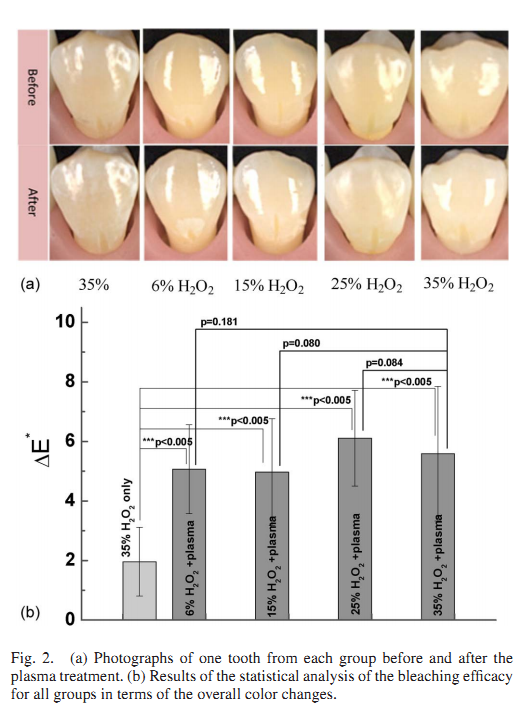
For individuals requiring long-term teeth whitening management, this “low-concentration, high-activity” technological approach also provides a new solution for balancing effectiveness and safety.
[1] J. Pan, X. Yang, K. Sun, J. Wang, P. Sun, H. Wu, K. H. Becker, W. Zhu, J. Zhang, and J. Fang, “Tooth bleaching using low concentrations of hydrogen peroxide in the presence of a nonthermal plasma jet,” IEEE Transactions on Plasma Science, vol. 41, no. 2, pp. 325–334, Feb. 2013.
[2] Koga-Ito, C. Y., Kostov, K. G., Miranda, F., et al. (2024). In vitro evaluation of the tooth bleaching efficacy and safety of high-concentration hydrogen peroxide with cold atmospheric plasma. Photodiagnosis and Photodynamic Therapy, 47, 104101.