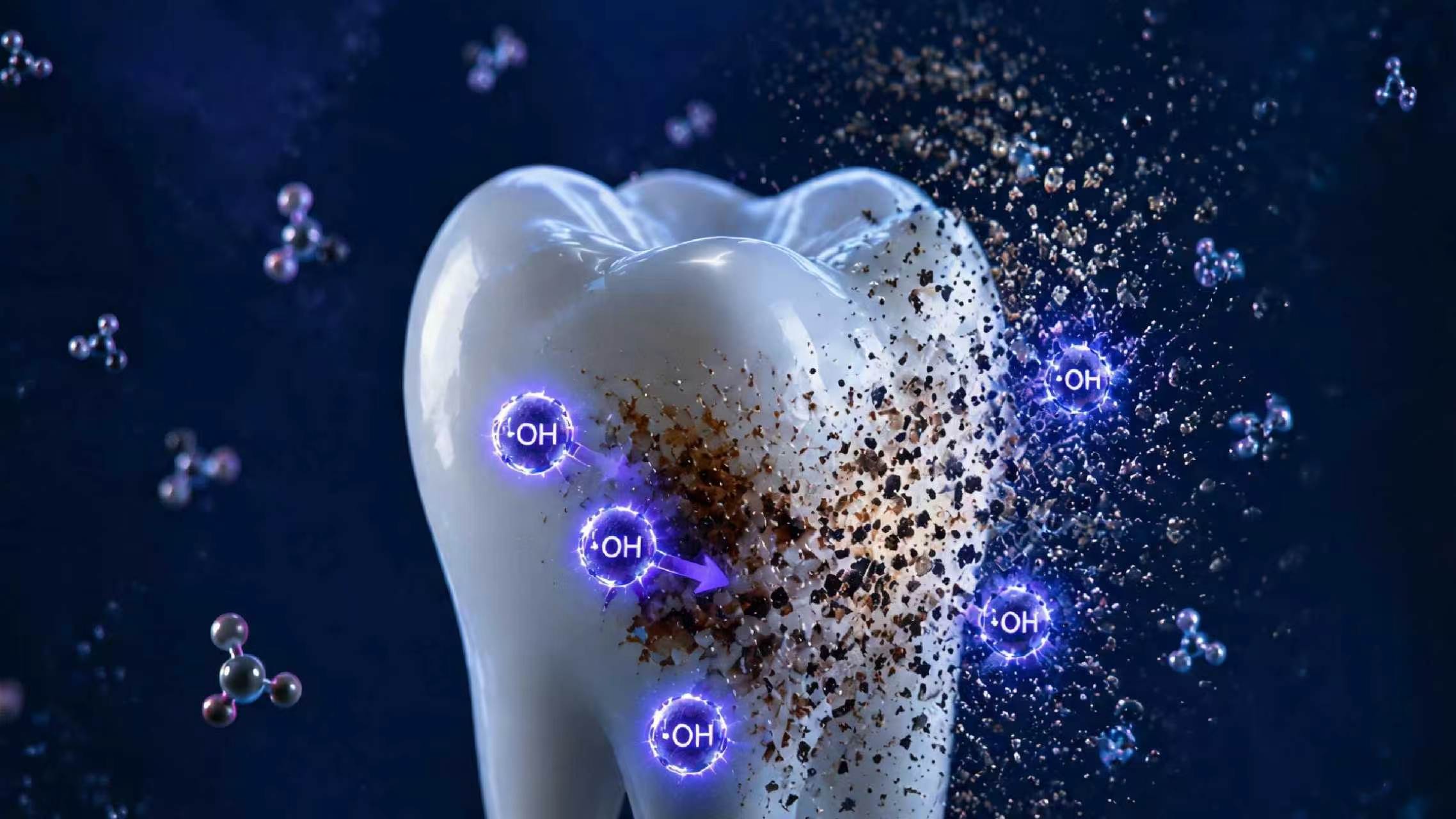
Cold atmospheric plasma (CAP) has gradually become a research focus in oral medicine. From the control of oral microorganisms and biofilms, to root canal disinfection, implant surface modification and teeth whitening, research on CAP has extended across a growing number of dental applications.[1][2]
Why do these seemingly unrelated applications connect to a single technology? The key lies in the fact that cold atmospheric plasma does not act through one single mechanism. Widen the view to the whole field of oral medicine, and a research thread becomes visible: Plasma Dentistry, a line of research that has been developing for many years.
Plasma is often described as the "fourth state of matter" after solid, liquid and gas. When a gas is excited and ionized under external energy input, it forms a complex system composed of electrons, ions, neutral particles and a variety of reactive components.[1]
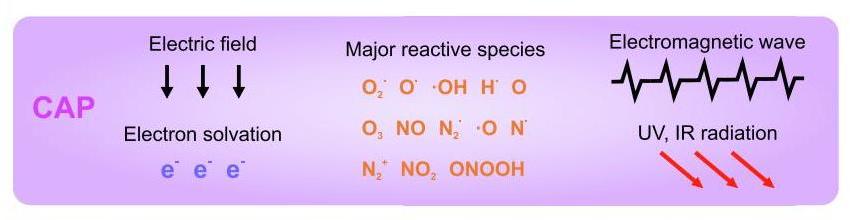
Unlike thermal plasma, cold atmospheric plasma is in a non-thermal equilibrium state. Electrons can carry relatively high energy while ions and neutral particles remain at a comparatively low temperature, which allows the system to sustain high reactivity at a low overall temperature.[1][2]
In this process, plasma can generate reactive oxygen species (ROS), reactive nitrogen species (RNS), hydroxyl radicals (·OH) and other highly reactive species. The type, concentration and mode of action of these species are further influenced by the plasma source, working gas, discharge parameters, treatment distance and the surrounding environment.[1][3]
The technological value of CAP therefore does not come from the action of any single particle, but from the complex reactive system formed during the plasma process. Microorganisms, biofilms, liquids, biological tissues and material surfaces can all become targets of this interaction — and that is what underpins the different research directions of CAP in dentistry.
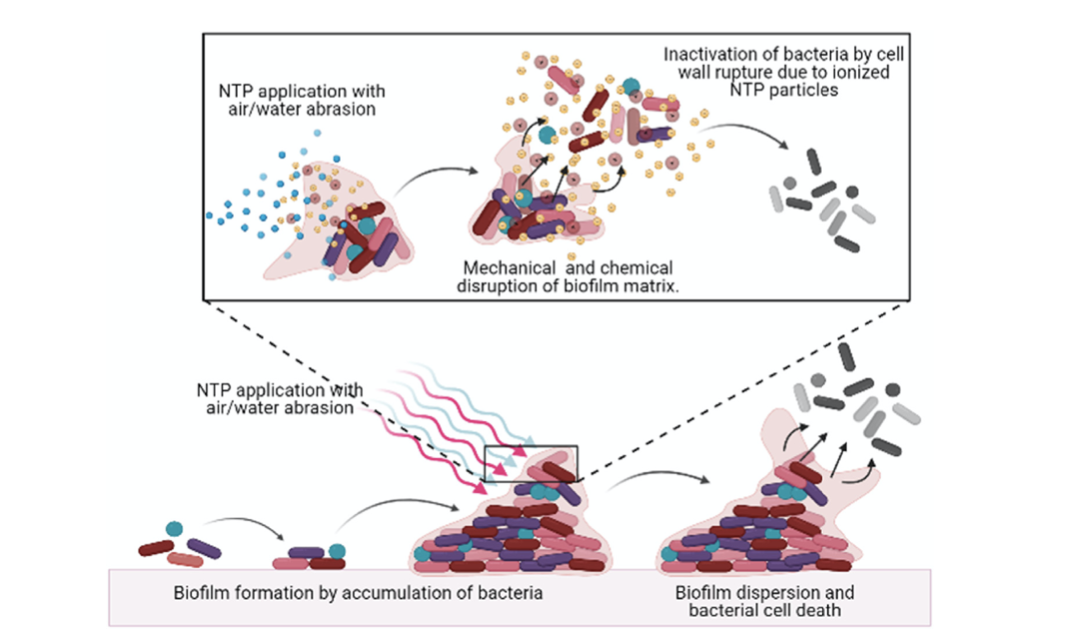
The oral cavity is a complex micro-ecological environment. Microorganisms exist not only in a planktonic state, but also form structurally complex biofilms on teeth, restorations and implants. How to act on microorganisms and biofilms has therefore become one of the earliest research directions to attract attention in the dental application of CAP.
Related studies have covered a range of oral microorganisms, including Streptococcus mutans, Enterococcus faecalis, Candida albicans and Porphyromonas gingivalis. Systematic reviews show that the reactive components generated by CAP, such as ROS and RNS, can act on microorganisms and affect oral biofilms.[3]
Beyond planktonic microorganisms, biofilms are themselves an important object of study. Mature biofilms have a complex structure built from extracellular polymeric substances, within which microorganisms are embedded. The reactive species produced by CAP can act on the biofilm and on the microorganisms within it, which has gradually extended this line of research from simple "sterilization" toward plaque biofilm control.[1][3]
If antimicrobial action on open surfaces demonstrates the effect of plasma on microorganisms and biofilms, the root canal system takes the technology into a more complex and confined oral environment.
The root canal system is not a regular, straight channel. It contains isthmuses, lateral canals, bifurcations and dentinal tubules, and some regions are difficult to reach adequately through mechanical instrumentation. Microbial control beyond mechanical preparation has therefore long been an important research topic in root canal treatment.
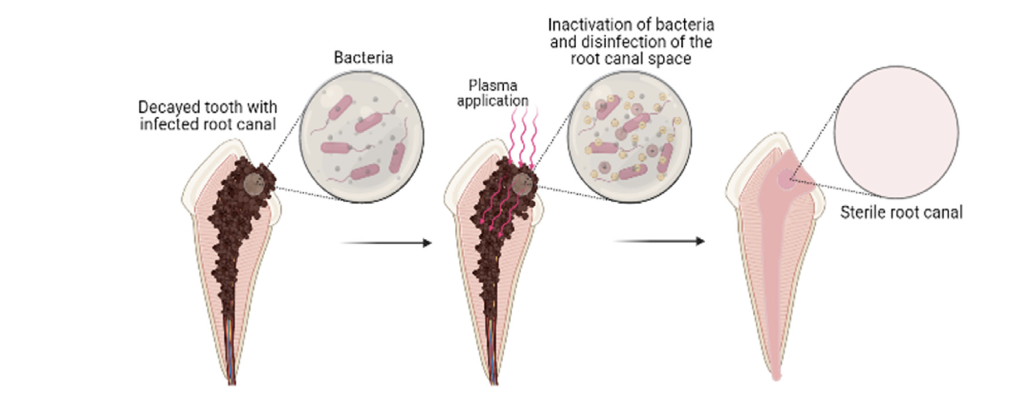
CAP is delivered in the form of a plasma jet, and its use in complex, minute spaces has attracted attention as a result.
A 2024 systematic review and meta-analysis on cold atmospheric plasma for root canal disinfection further consolidated the research in this field, with E. faecalis among the most frequently studied organisms. The studies concerned focus mainly on the effects of CAP on microorganisms and biofilms inside root canals, as well as the influence of different plasma parameters and treatment conditions on antimicrobial outcomes.[4]
From microbial control on open surfaces to the structurally complex root canal system, the research scenarios for CAP in oral antimicrobial applications continue to expand.
Research on CAP in dentistry is not limited to "sterilization."
Implant surface research illustrates another mode of action: changing the physicochemical properties of a material surface, in particular its wettability.
After implantation, the implant surface undergoes a series of interactions with body fluids, proteins and cells, and surface hydrophilicity has therefore become an important indicator in implant surface research. Studies have found that non-thermal atmospheric pressure plasma (NTAPP) treatment can reduce the contact angle of titanium implant material surfaces, increase hydrophilicity, and promote the adhesion and spreading of osteoblasts on the material surface.[1][5]
Related studies have also explored the possibility of chairside plasma treatment prior to implant placement, extending plasma surface treatment from laboratory material modification into practical clinical settings.[1]
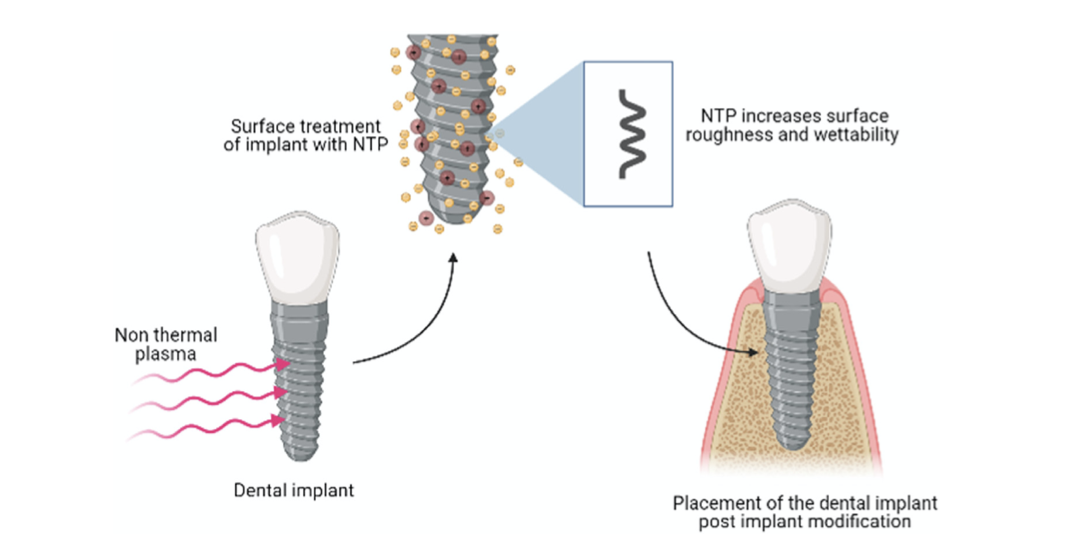
This application is highly representative. If antimicrobial and root canal research mainly reflects the interaction between plasma and microorganisms, then implant surface hydrophilicity modification demonstrates another kind of interaction — that between plasma and the material interface.
Teeth whitening is one of the representative research directions of plasma–liquid interaction in dentistry.
As early as 2009, Lee and colleagues reported the use of non-thermal atmospheric pressure plasma for teeth whitening. In experiments combining plasma with H₂O₂, enhanced whitening outcomes were observed, and the role of reactive species such as ·OH was analyzed.[6]
Since then, research on plasma + H₂O₂ has appeared in different technical forms. In 2010, Sun and colleagues studied a direct-current cold atmospheric-pressure air plasma microjet combined with H₂O₂ for tooth whitening.[7]
In 2013, Nam and colleagues published a study titled "High-efficiency tooth bleaching using non-thermal atmospheric pressure plasma with low concentration of hydrogen peroxide," applying non-thermal atmospheric pressure plasma together with low-concentration H₂O₂ to teeth whitening.[8]
These studies show that "plasma + H₂O₂" and "plasma + low-concentration H₂O₂" are not concepts that emerged only in recent years. They represent a Plasma Teeth Whitening technology pathway that has been under continuous investigation for many years.
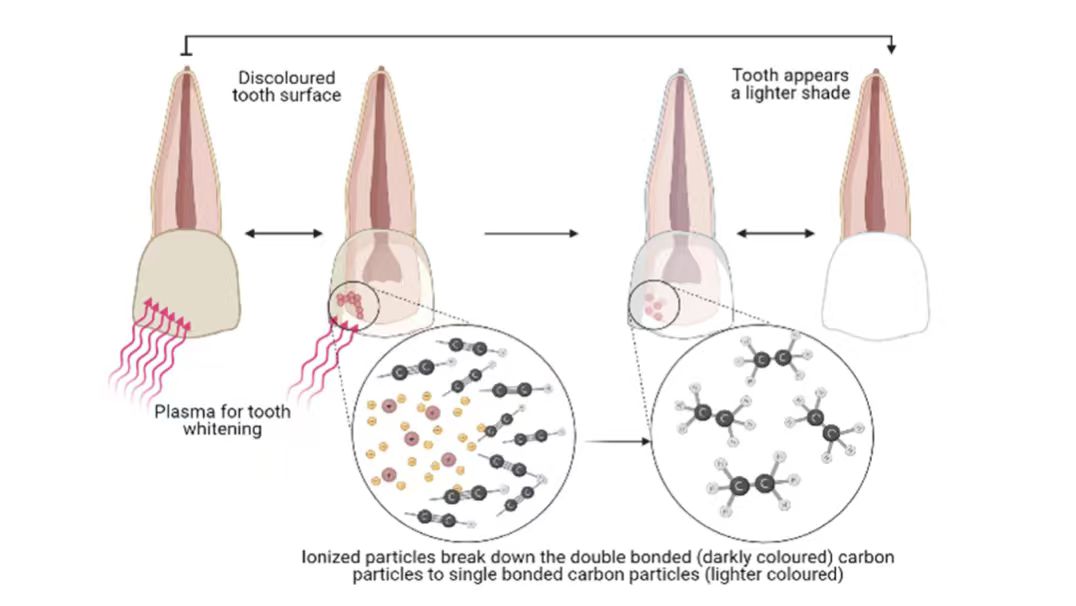
In recent years, this research path has further extended to plasma-activated water (PAW) and free radical-regulating systems. Zhang and colleagues constructed a two-phase free radical hydrogel (TP-GEL), integrating N-TiO₂ and plasma-activated water into a hydrogel system that gives the material the ability to absorb, store, generate and release free radicals. In this experimental system, the H₂O₂ concentration was below 3%, while high teeth whitening efficiency and antibacterial activity were observed.[9]
From early plasma-assisted H₂O₂, to low-concentration H₂O₂ plus plasma, to plasma-activated water and free radical material systems, the research format keeps changing — yet one clear technical thread runs through it: using plasma to generate and regulate highly reactive species, and thereby intervening in the oxidative reactions of teeth whitening.
Hydrogen peroxide (H₂O₂, HP) is a common oxidizing agent in teeth whitening, and its effect is closely related to oxidation reactions involving peroxides. Highly reactive species such as the hydroxyl radical (·OH) are considered to play an important role in this process.
Kawamoto and Tsujimoto, in their study on the mechanism of H₂O₂ tooth bleaching, found that detectable ·OH increased as the H₂O₂ concentration increased, and proposed that the hydroxyl radical plays an important role in hydrogen peroxide tooth bleaching.[10] This finding forms an important technical point of connection between plasma and teeth whitening.
Cold atmospheric plasma itself has the ability to generate and regulate highly reactive species. When plasma interacts with liquid-phase systems such as water and H₂O₂, it can influence the generation of reactive species in the liquid phase. Early studies on plasma + H₂O₂ teeth whitening already observed changes in reactive species such as ·OH, while subsequent research on plasma-activated water has extended the focus further, to how plasma changes the reactive state of liquid-phase systems.[6][7][9]
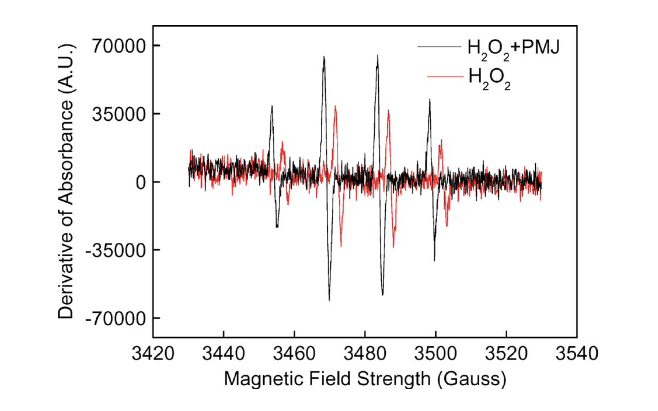
ESR spectrum of ·OH adducts: after plasma treatment, the DMPO–·OH signal nearly doubled.
Therefore, the combination of plasma and teeth whitening is not simply a matter of adding a "plasma device" to a conventional whitening procedure. It is about using plasma activation to intervene in the reaction process of the whitening system itself.
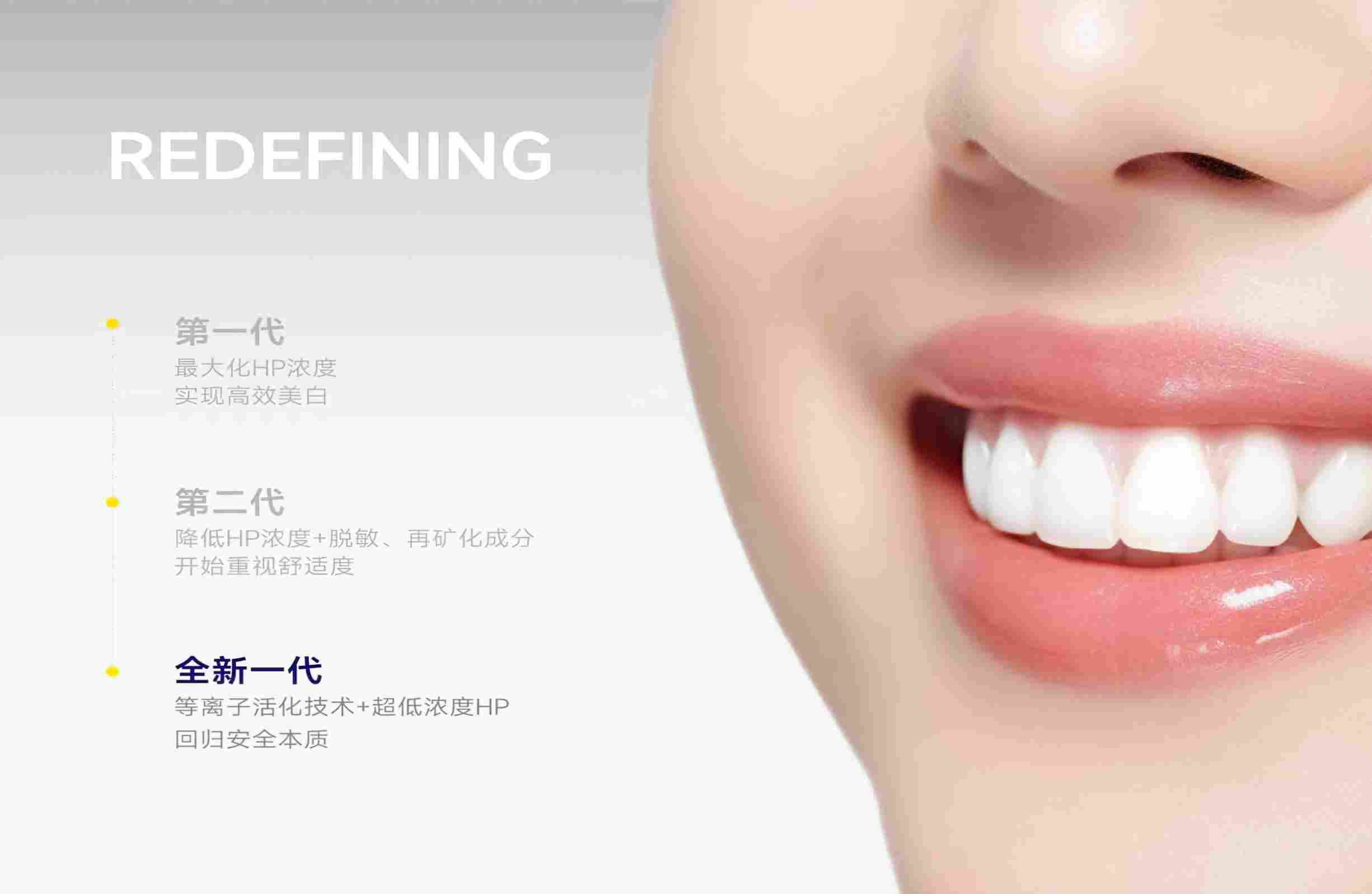
In conventional peroxide whitening systems, raising the HP concentration is one of the most direct technical means of strengthening oxidative conditions. Plasma activation introduces a different source of efficiency: by promoting the generation and utilization of highly reactive species, it raises the reactivity of the whitening system itself, reducing the reliance on the single technical path of raising peroxide concentration.
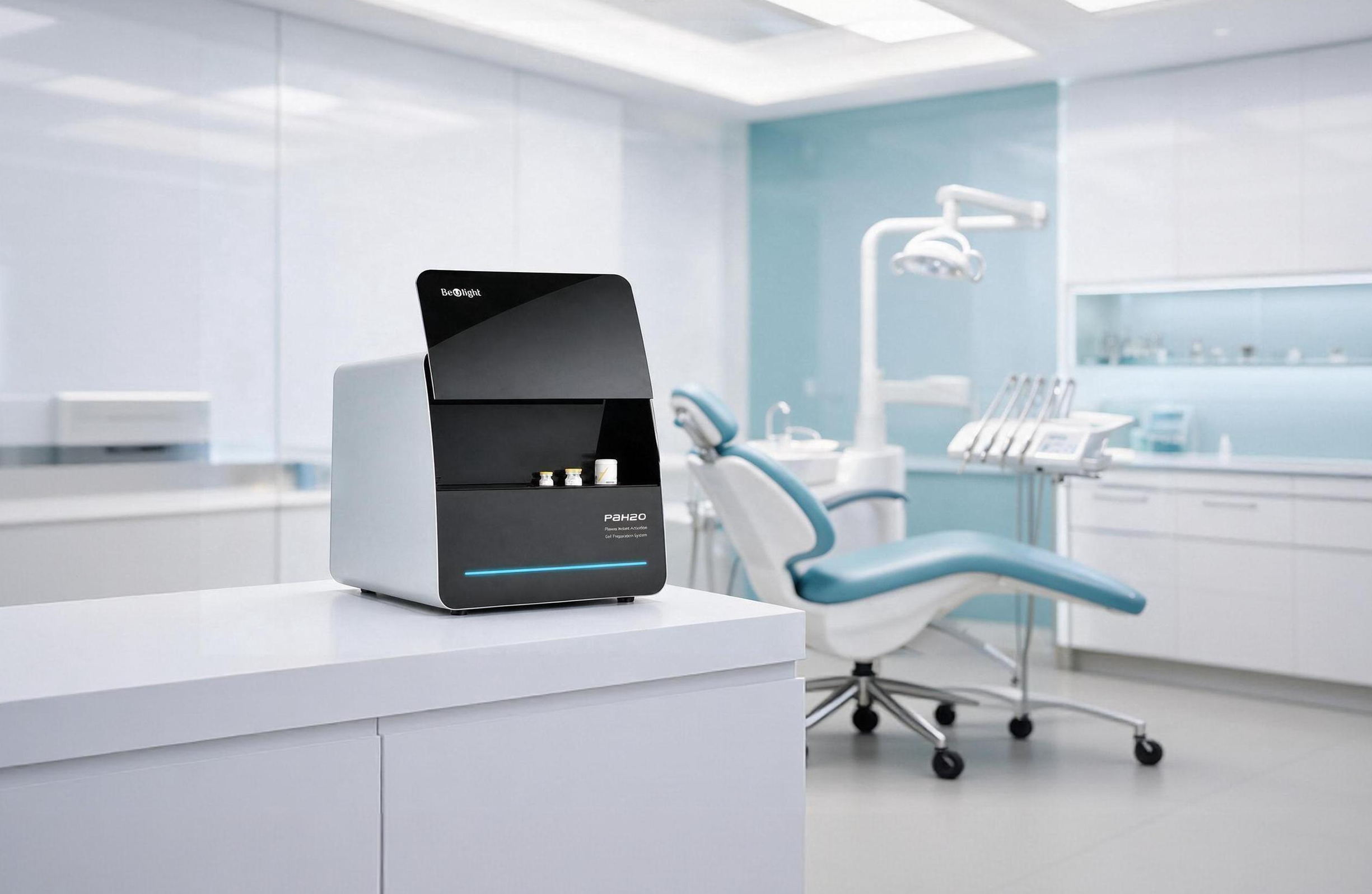
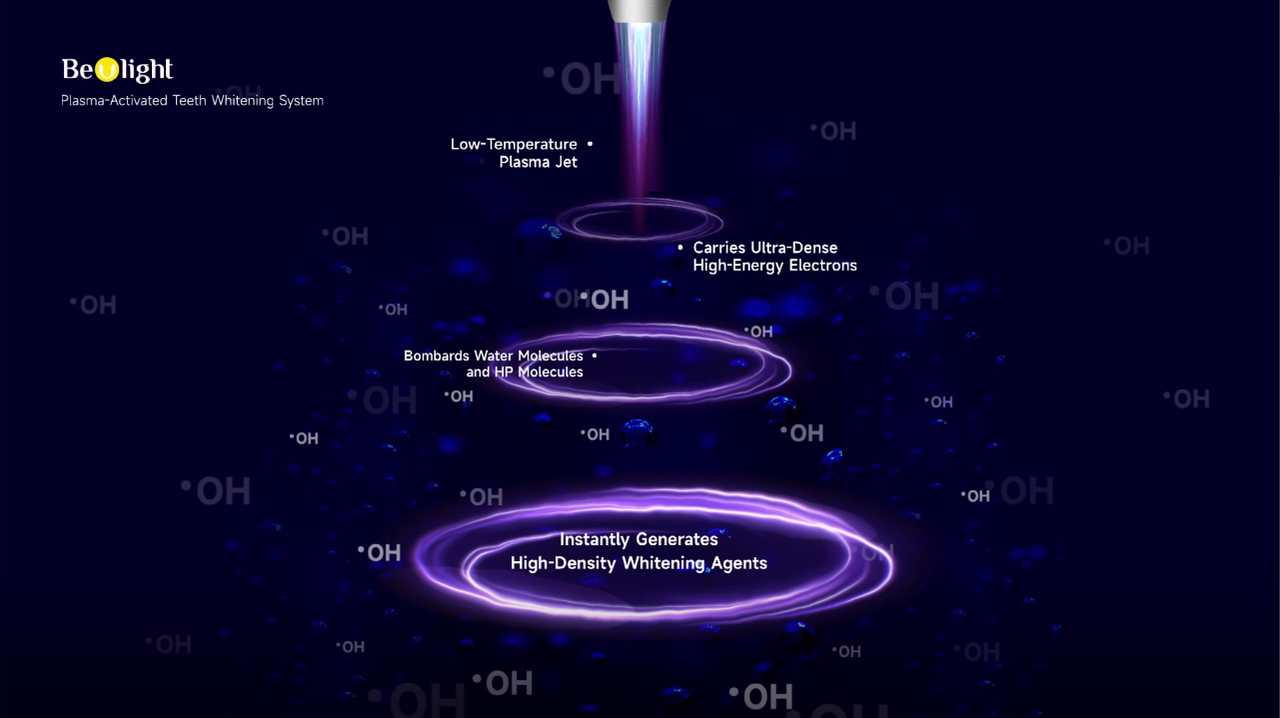
Following this technical logic, the BeUlight Plasma-Activated Teeth Whitening System combines cold plasma activation technology with a ≤3% HP whitening system, establishing the "Plasma × ≤3% HP" pathway for Plasma-Activated Teeth Whitening. Through on-site activation of "water + ≤3% HP" by cold atmospheric plasma, the generation of hydroxyl radicals (·OH) and other reactive oxygen species (ROS) is promoted, and the freshly prepared activated system is further converted into a high-activity gel for professional teeth whitening.
In this process, plasma activation does not increase the HP concentration. Instead, it enhances the reactivity of the system on the basis of a low concentration of ≤3% HP. "≤3% HP" and "plasma activation" are therefore not two independent product features; together they form the technical logic of "low concentration, high activity."
From oral antimicrobial action and biofilm control, to the complex root canal environment, to implant surface hydrophilicity modification and teeth whitening, cold atmospheric plasma has established a sustained research thread across multiple areas of dentistry. Teeth whitening is not a plasma application that appeared in isolation from this research background — it is one of the representative technical directions in the development of Plasma Dentistry.
For teeth whitening, the change brought by this technical path is this: achieving higher reactivity is no longer only a matter of raising peroxide concentration. Enhancing the reactivity of a low-concentration system through plasma activation also provides a different technical path for professional teeth whitening.
References
[1] Lata S, Chakravorty S, Mitra T, et al. Aurora Borealis in dentistry: The applications of cold plasma in biomedicine. Materials Today Bio. 2022;13:100200. doi:10.1016/j.mtbio.2021.100200.
[2] Gherardi M, Tonini R, Colombo V. Plasma in Dentistry: Brief History and Current Status. Trends Biotechnol. 2018;36(6):583–585. doi:10.1016/j.tibtech.2017.06.009.
[3] Bernhardt T, Semmler ML, Schäfer M, Bekeschus S, Emmert S, Boeckmann L. The Antimicrobial Effect of Cold Atmospheric Plasma against Dental Pathogens—A Systematic Review of In-Vitro Studies. Antibiotics (Basel). 2021;10(2):211. doi:10.3390/antibiotics10020211.
[4] Sanesi L, Puca V, Caponio VCA, et al. Disinfection of Dental Root Canals by Cold Atmospheric Plasma: A Systematic Review and Meta-analysis of Dental Biofilm. Front Oral Health. 2024;5:1483078. doi:10.3389/froh.2024.1483078.
[5] Duske K, Koban I, Kindel E, et al. Atmospheric plasma enhances wettability and cell spreading on dental implant metals. J Clin Periodontol. 2012;39:400–407. doi:10.1111/j.1600-051X.2012.01853.x.
[6] Lee HW, Kim GJ, Kim JM, Park JK, Lee JK, Kim GC. Tooth bleaching with nonthermal atmospheric pressure plasma. J Endod. 2009;35:587–591. doi:10.1016/j.joen.2009.01.008.
[7] Sun P, Pan J, Tian Y, et al. Tooth whitening with hydrogen peroxide assisted by a direct-current cold atmospheric-pressure air plasma microjet. IEEE Trans Plasma Sci. 2010;38:1892–1896. doi:10.1109/TPS.2009.2039585.
[8] Nam SH, Lee HW, Cho SH, et al. High-efficiency tooth bleaching using non-thermal atmospheric pressure plasma with low concentration of hydrogen peroxide. J Appl Oral Sci. 2013;21:265–270. doi:10.1590/1679-775720130016.
[9] Zhang L, Pan J, Zhang J. Integrated two-phase free radical hydrogel: Safe, ultra-fast tooth whitening and antibacterial activity. J Mater Sci Technol. 2022;100:59–66. doi:10.1016/j.jmst.2021.05.029.
[10] Kawamoto K, Tsujimoto Y. Effects of the hydroxyl radical and hydrogen peroxide on tooth bleaching. J Endod. 2004;30(1):45–50. doi:10.1097/00004770-200401000-00010.